












Pro-Life Laws Protect Mom and Baby: Pregnant Women’s Lives are Protected in All States



Originally published in July 2022; updated in September 2023 and again in December 2025.
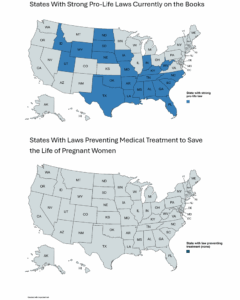
Twenty-two states have one or more strong gestational limits on abortion that are either in effect or are enjoined while in litigation. Each of these states permits abortion in those rare and heartbreaking circumstances when it is necessary to save the life of a pregnant woman. Physicians can make this determination based on their “reasonable medical judgment,” a standard very common in the medical profession and used for any case involving medical malpractice litigation. Physicians are trained to use their best judgment to care for patients; however, it would be prudent for state medical boards, state medical societies, state boards of pharmacy, hospital quality committees, and hospital attorneys to provide more detailed guidance to doctors on how to reach a determination that abortion is necessary. Tragically, this type of guidance appears slow in coming. Meanwhile, abortion advocates are spreading the dangerous lie that life-saving care is not or may not be permitted in these states, leading to provider confusion and poor outcomes for women.
To assist healthcare providers and dispel the myths being spread by those more concerned with promoting abortion than women’s health, this document discusses miscarriage management, treatment for ectopic pregnancy, and medical conditions that could qualify as life-threatening, permitting abortion under pro-life laws. Specifically, we cite guidance from the American College of Obstetricians and Gynecologists (ACOG), a prominent professional organization that has provided comprehensive guidance for management of obstetric and gynecologic conditions.
Further, the exact text of the laws, definitions, and exceptions are included below to further demonstrate that the laws in question do not inhibit appropriate and standard medical care.
While some laws contain definitions and exceptions that more explicitly speak to certain situations, each law reviewed does not prevent mothers from receiving the medical care necessary. A plain reading of any of these statutes easily refutes the false and dangerous misinformation being spread by pro-abortion activists. Further, none of the laws reviewed prohibit a medical professional from acting as necessary when facing a life-threatening medical emergency; therefore, under these laws medical professionals can exercise reasonable medical judgement and as outlined by the ACOG guidance, are not required to delay necessary care and treatment to a mother.
Because the terminology can be confusing, it is important to be aware that a “spontaneous abortion” describes a “miscarriage,” a pregnancy where the fetus dies naturally. An “induced abortion” is sometimes shortened to the layman’s term “abortion,” indicating that the pregnancy was intentionally ended in order to cause the death of the fetus. Additionally, “termination of pregnancy” and “medically indicated separation” indicate that the mother will be separated from her fetus but does not indicate the method used. This can be done by labor induction or c-section, potentially resulting in a live baby if he has reached an appropriate gestational age. “Induced abortion” indicates that a dead baby will be the outcome of the intervention (such as after a dilation and evacuation “dismemberment” abortion). While the law allows induced abortion if needed in order to protect the mother’s life, compassionate care and respect for fetal life would dictate that the fetus should be delivered intact and alive if possible.
Miscarriage Management, Ectopic Pregnancy, and Specific Medical Conditions that Potentially Qualify as “Life-threatening” Under Pro-Life Laws
Miscarriage Management
A straightforward reading of laws restricting abortion of a living fetus provides clear evidence that treatment of miscarriage is not prohibited by law (as the intent is to remove a deceased fetus); nonetheless, widespread confusion and anecdotes of denied care necessitate discussion of miscarriage treatment, which can be similar to interventions used to provide elective abortion.
ACOG Practice Bulletin 200: Early Pregnancy Loss. Obstet Gynecol. 2018;132(5):197-207:
“Accepted treatment options for early pregnancy loss include expectant management, medical treatment, or surgical evacuation” (p. 198). “Patients should be counseled about the risks and benefits of each option…Because of a lack of safety studies of expectant management in the second trimester and concerns about hemorrhage, expectant management generally should be limited to gestations within the first trimester” (p. 199). “Women who present with hemorrhage, hemodynamic instability, or signs of infection should be treated urgently with surgical uterine evacuation” (p. 201). “In patients for whom medical management of early pregnancy loss is indicated, initial treatment using 800 micrograms of vaginal misoprostol is recommended, with a repeat dose as needed. The addition of a dose of mifepristone (200 mg orally) 24 hours before misoprostol administration may significantly improve treatment efficacy and should be considered when mifepristone is available” (p. 203). (Note: An FDA Risk Evaluation and Mitigation Strategy requires a provider to be registered to prescribe mifepristone, so it is not widely available, because few ob/gyns perform elective abortions.)
Ectopic Pregnancy
While not all state laws explicitly exclude the treatment of ectopic pregnancy from the definition of abortion, its treatment is otherwise covered in any “life of the mother” exception. A failure to treat an ectopic pregnancy will inevitably lead to the death of the baby and possibly the death of the mother and has therefore never been considered abortion.
ACOG Practice Bulletin 193: Tubal Ectopic Pregnancy. Obstet Gynecol. 2018;131(3):91-103:
“Ruptured ectopic pregnancy continues to be a significant cause of pregnancy-related mortality and morbidity” (p. 91). “In clinically stable women in whom a nonruptured ectopic pregnancy has been diagnosed, laparoscopic surgery or intramuscular methotrexate administration are safe and effective treatments. The decision for surgical or medical management of ectopic pregnancy should be guided by the initial clinical, laboratory and radiologic data as well as patient-informed choice based on a discussion of the benefits and risks of each approach. Surgical management of ectopic pregnancy is required when a patient is exhibiting any of the following: hemodynamic instability, symptoms of an ongoing ruptured ectopic mass (such as pelvic pain) or signs of intraperitoneal bleeding” (p. 99).
Emergency Evaluation and Treatment
ACOG Committee Opinion 667: Hospital-Based Triage of Obstetric Patients. Obstet Gynecol. 2016;128:16-19:
“The federal Emergency Medical Treatment and Labor Act (EMTALA) requires an initial medical screening examination to determine if a true medical emergency exists; in the case of a pregnant woman, this includes evaluation of the woman and the fetus” (p. 17).
As noted by President Joe Biden’s executive order and HHS directives, EMTALA requires evaluation and stabilization of a pregnant woman presenting with a suspected emergency. None of the state laws prohibit this evaluation or provision of life-saving care. Note that EMTALA considers both the woman and the fetus to be included as patients in need of care in this directive.
Potentially Life-Threatening Complications that May Require Separation of Mother and Child
Life-Threatening Hypertensive Emergency:
ACOG Practice Bulletin 222: Gestational Hypertension and Preeclampsia. Obstet Gynecol 2020;135(6):237-260; ACOG Practice Bulletin 203: Chronic Hypertension in Pregnancy. Obstet Gynecol 2019;133(1):26-50:
“Delivery is recommended when gestational hypertension or preeclampsia with severe features is diagnosed at or beyond 34 0/7 weeks of gestation, after maternal stabilization or with labor or prelabor rupture of membranes…The expectant management of preeclampsia with severe features before 34 0/7 weeks of gestation is based on strict selection criteria of those appropriate candidates and is best accomplished in a setting with resources appropriate for maternal and neonatal care. Because expectant management is intended to provide neonatal benefit at the expense of maternal risk, expectant management is not advised when neonatal survival is not anticipated” (p. 252).
Periviable[1] Prelabor Rupture of Membranes:
ACOG Practice Bulletin 217: Prelabor Rupture of Membranes. Obstet Gynecol 2020;135(3):80-97:
“Women presenting with PROM before neonatal viability should be counseled regarding the risks and benefits of expectant management versus immediate delivery. Counseling should include a realistic appraisal of neonatal outcomes. Immediate delivery (termination of pregnancy by induction of labor or dilation and evacuation) and expectant management should be offered. Physicians should provide patients with the most current and accurate information possible” (p. 88).
Periviable Preterm[2] Labor without Rupture of Membranes:
ACOG Practice Bulletin 171: Management of Preterm Labor. Obstet Gynecol 2016;128:155-164:
“In general, tocolytics are not indicated for use before neonatal viability. Regardless of interventions, perinatal morbidity and mortality at that time are too high to justify the maternal risks associated with tocolytic therapy” (p.156).
Life-threatening Maternal Heart Disease:
ACOG Practice Bulletin 212: Pregnancy and Heart Disease. Obstet Gynecol 2019;133(5):320-356:
“Patients should be counseled to avoid pregnancy or consider induced abortion if they have severe heart disease, including an ejection fraction below 30% or class III/IV heart failure, severe valvular stenosis, Marfan Syndrome with aortic diameter more than 45 mm, bicuspid aortic valve with aortic diameter more than 50 mm, or pulmonary arterial hypertension…Patients with moderate and high risk cardiovascular disease should be managed during the pregnancy, delivery and the postpartum period in medical centers with a multidisciplinary Pregnancy Heart Team that includes obstetric providers, maternal fetal medicine subspecialists, cardiologists, and an anesthesiologist at a minimum…A personalized approach estimating the maternal and fetal hazards related to the patient’s specific cardiac disorder and the patient’s pregnancy plans can provide anticipatory guidance to help support her decision making.” (p. 346).
Placenta Accreta Spectrum:
ACOG Obstetric Care Consensus 7. Placenta Accreta Spectrum. Obstet Gynecol 2018;132:259-275:
“When the diagnosis of placenta accreta spectrum is made in the previable period, it is important to include counseling about the possibility of pregnancy termination for maternal indications given the significant risk of maternal morbidity and mortality. However, there are currently no data to support the magnitude of risk reduction, if any. Further, pregnancy termination in the setting of placenta accreta spectrum also carries risk, and the complexities of counseling should be undertaken by health care providers who are experienced in these procedures” (p. 263-264).
Critically Ill Patient in an Intensive Care Unit (ICU):
ACOG Practice Bulletin 211. Critical Care in Pregnancy. Obstet Gynecol 2019;133:303-319:
“Because the risk benefit considerations for continued pregnancy versus delivery are likely to change as the pregnancy and critical illness progress, the care plan must be reevaluated regularly. In situations when there is an acute deterioration in the patient’s clinical condition, immediate reassessment of continuing the pregnancy versus delivery should be undertaken” (p 308). “When obstetric patients are transferred to the ICU, patient care decisions including mode, location and timing of delivery ideally should be made collaboratively between the intensivist, obstetrician-gynecologist, and neonatologist, and should involve the patient and her family when possible” (p. 314).
Cancer Treatment in Pregnancy:
Treatment considerations and concerns for maternal and fetal health can vary depending on the type of cancer, the degree of spread, the likelihood of recurrence, the proximity of the cancer to the uterus, the possibility of cancer promotion due to pregnancy hormones, and the toxicity of treatment options for the unborn child (which may include surgery, radiation and chemotherapy), so there is not a standard recommendation on how cancer treatment should be addressed in pregnancy. However, if a multidisciplinary team concludes that ending the pregnancy would benefit a woman undergoing cancer treatment, this management would also fall under exemptions for the “life of the mother.”
The above discussion is not all-inclusive, and it is recognized that there are likely other situations that can threaten a woman’s life in pregnancy. Complying with state legislation differs little from conventional obstetric practice, as either may result in litigation, but is unlikely to do so when quality care is rendered. Obstetrician/gynecologists must continue to adhere to the standard of care, and recommendations from the American College of Obstetricians and Gynecologists as well as other obstetric medical organizations when providing support for medically indicated interventions. Additional information may be found in (but is not limited to) the following documents:
- ACOG Practice Bulletin 201: Pregestational diabetes mellitus. Obstet Gynecol2018;132(6):228-248.
- ACOG Practice Bulletin 183: Postpartum hemorrhage. Obstet Gynecol2017;130(4):168-186.
- ACOG Practice Bulletin 142: Cerclage for the management of cervical insufficiency.Obstet Gynecol. 2014;123:372-379.
States with Strong Pro-Life Laws
Alabama[3]
Summary
Alabama prohibits abortion unless “reasonable medical judgment” demonstrates that an abortion is necessary to protect the mother’s life or prevent major impairment. Abortion does not include acts done to save the life or protect the health of an unborn baby, to remove a dead baby, to deliver the baby prematurely to avoid serious risks to the mother’s or baby’s health, to treat ectopic pregnancy, or to terminate the pregnancy of a woman when the child has a “lethal anomaly.”
The Law and the Exceptions
“It shall be unlawful for any person to intentionally perform or attempt to perform an abortion….”
Abortion is permitted if “an attending physician licensed in Alabama determines that an abortion is necessary in order to prevent a serious health risk to the unborn child’s mother.”
A “serious health risk to the unborn child’s mother” is defined as “in reasonable medical judgment, the child’s mother has a condition that so complicates her medical condition that it necessitates the termination of her pregnancy to avert her death or to avert serious risk of substantial physical impairment of a major bodily function. This term does not include a condition based on a claim that the woman is suffering from an emotional condition or a mental illness which will cause her to engage in conduct that intends to result in her death or the death of her unborn child. However, the condition may exist if a second physician who is licensed in Alabama as a psychiatrist, with a minimum of three years of clinical experience, examines the woman and documents that the woman has a diagnosed serious mental illness and because of it, there is reasonable medical judgment that she will engage in conduct that could result in her death or the death of her unborn child. If the mental health diagnosis and likelihood of conduct is confirmed as provided in this chapter, and it is determined that a termination of her pregnancy is medically necessary to avoid the conduct, the termination may be performed and shall be only performed by a physician licensed in Alabama in a hospital as defined in the Alabama Administrative Code and to which he or she has admitting privileges.”
Definition of abortion and clarifications about what is not an abortion
An abortion is “[t]he use or prescription of any instrument, medicine, drug, or any other substance or device with the intent to terminate the pregnancy of a woman known to be pregnant with knowledge that the termination by those means will with reasonable likelihood cause the death of the unborn child. The term does not include these activities if done with the intent to save the life or preserve the health of an unborn child, remove a dead unborn child, to deliver the unborn child prematurely to avoid a serious health risk to the unborn child’s mother, or to preserve the health of her unborn child. The term does not include a procedure or act to treat an ectopic pregnancy, nor does it include the procedure or act to terminate the pregnancy of a woman when the unborn child has a lethal anomaly.”
A “lethal anomaly” is “[a] condition from which an unborn child would die after birth or shortly thereafter or be stillborn.”
Arkansas[4]
Summary
Arkansas prohibits abortion unless it is necessary to save a mother’s life. The law excludes from the definition of abortion acts to preserve the life or health of the unborn baby, to remove an unborn baby who was miscarried, or to treat an ectopic pregnancy.
The Law and the Exceptions
“A person shall not purposely perform or attempt to perform an abortion except to save the life of a pregnant woman in a medical emergency.”
“‘Medical emergency’ means a condition in [sic] which, in reasonable medical judgment, complicates the medical condition of a pregnant woman to such an extent that termination of a pregnancy is necessary to preserve the life of a pregnant woman whose life is endangered by a physical disorder, physical illness, or physical injury, including a life-endangering physical condition caused by or arising from the pregnancy itself … ‘Medical emergency’ does not include: (i) Conditions for which treatment is available that can, in reasonable medical judgement, be expected to preserve or sustain the life of the pregnant woman without ending the pregnancy; (ii) A psychological or emotional condition; or (iii) A medical diagnosis that is based on a claim made by the pregnant woman or based on a presumption that the pregnant woman will engage in conduct that could result in her death or that could cause substantial and irreversible physical impairment of a major bodily function of the pregnant woman.”
The law “does not … [p]rohibit the sale, use, prescription, or administration of a contraceptive measure, drug, or chemical if the contraceptive measure, drug, or chemical is administered before the time when a pregnancy could be determined through conventional medical testing and if the contraceptive measure, drug, or chemical is sold, used, prescribed, or administered in accordance with manufacturer instructions.”
Definition of abortion and clarifications about what is not an abortion
Abortion “means the act of using, prescribing, administering, procuring, or selling of any instrument, medicine, drug, or any other substance, device, or means with the purpose to terminate the pregnancy of a woman, with knowledge that the termination by any of those means will with reasonable likelihood cause the death of the unborn child. (B) An act under subdivision (1)(A) of this section is not an abortion if the act is performed with the purpose to: (i) Save the life or preserve the health of the unborn child; (ii) Remove a dead unborn child caused by spontaneous abortion; or (iii) Remove an ectopic pregnancy…”
Florida[5]
Summary
Florida prohibits abortion after 6 weeks unless it is necessary to save the life of the mother or protect her from substantial impairment, the unborn baby has not progressed to the third trimester and has a “fatal fetal abnormality,” or the pregnancy resulted from rape or incest and the unborn baby is younger than 15 weeks. The definition of abortion excludes actions taken to produce a live birth or remove a dead unborn baby.
The Law and the Exceptions
“A physician may not knowingly perform or induce a termination of pregnancy if the physician determines the gestational age of the fetus is more than 6 weeks unless one of the following conditions is met:
(a) Two physicians certify in writing that, in reasonable medical judgment, the termination of the pregnancy is necessary to save the pregnant woman’s life or avert a serious risk of substantial and irreversible physical impairment of a major bodily function of the pregnant woman other than a psychological condition.
(b) The physician certifies in writing that, in reasonable medical judgment, there is a medical necessity for legitimate emergency medical procedures for termination of the pregnancy to save the pregnant woman’s life or avert a serious risk of imminent substantial and irreversible physical impairment of a major bodily function of the pregnant woman other than a psychological condition, and another physician is not available for consultation.
(c) The pregnancy has not progressed to the third trimester and two physicians certify in writing that, in reasonable medical judgment, the fetus has a fatal fetal abnormality.
(d) The pregnancy is the result of rape, incest, or human trafficking [that she has reported] and the gestational age of the fetus is not more than 15 weeks as determined by the physician…”
“‘Fatal fetal abnormality’ means a terminal condition that, in reasonable medical judgment, regardless of the provision of life-saving medical treatment, is incompatible with life outside the womb and will result in death upon birth or imminently thereafter.”
Definition of abortion and clarifications about what is not an abortion
“‘Abortion’ means the termination of human pregnancy with an intention other than to produce a live birth or to remove a dead fetus.”
Georgia[6]
Summary
Georgia prohibits abortion after an unborn baby has a heartbeat except to save the mother’s life or to prevent substantial impairment. Abortion is also permitted up to 20 weeks if the pregnancy resulted from rape or incest, or if the baby is unlikely to survive long after birth because of a “profound” anomaly. Abortion does not include removing a dead unborn baby after miscarriage or treating ectopic pregnancy. Women upon whom illegal abortions are performed can recover civil damages.
The Law and the Exceptions
Georgia prohibits abortion “if an unborn child has been determined … to have a detectable human heartbeat except when: (1) A physician determines, in reasonable medical judgment, that a medical emergency exists; (2) The probable gestational age of the unborn child is 20 weeks or less and the pregnancy is the result of rape or incest in which an official police report has been filed alleging the offense of rape or incest…; or (3) A physician determines, in reasonable medical judgment, that the pregnancy is medically futile.”
“‘Medical emergency’ means a condition in which an abortion is necessary in order to prevent the death of the pregnant woman or the substantial and irreversible physical impairment of a major bodily function of the pregnant woman. No such greater risk shall be deemed to exist if it is based on a diagnosis or claim of a mental or emotional condition of the pregnant woman or that the pregnant woman will purposefully engage in conduct which she intends to result in her death or in substantial and irreversible physical impairment of a major bodily function.”
“‘Medically futile’ means that, in reasonable medical judgment, an unborn child has a profound and irremediable congenital or chromosomal anomaly that is incompatible with sustaining life after birth.”
Definition of abortion and clarifications about what is not an abortion
Abortion “means the act of using, prescribing, or administering any instrument, substance, device, or other means with the purpose to terminate a pregnancy with knowledge that termination will, with reasonable likelihood, cause the death of an unborn child; provided, however, that any such act shall not be considered an abortion if the act is performed with the purpose of: (A) Removing a dead unborn child caused by spontaneous abortion; or (B) Removing an ectopic pregnancy.”
Idaho[7]
Summary
Idaho’s abortion law prohibits abortion unless it is necessary to save the life of the mother; however, abortion is permitted in the first trimester if the pregnancy resulted from rape or incest. When a pregnancy is terminated to save the mother’s life, the physician must choose a procedure that is most likely to save the life of the baby and protect the mother. The law explicitly excludes contraception, the removal of a dead unborn child, the removal of an ectopic or molar pregnancy, and the treatment of a woman who is no longer pregnant from the definition of abortion.
The Law and the Exceptions
Idaho’s abortion law provides that except under certain circumstances: “[e]very person who performs or attempts to perform an abortion as defined in this chapter commits the crime of criminal abortion.”
The following are the exceptions to the law: “The abortion was performed or attempted by a physician … and: (i) The physician determined, in his good faith medical judgment and based on the facts known to the physician at the time, that the abortion was necessary to prevent the death of the pregnant woman. No abortion shall be deemed necessary to prevent the death of the pregnant woman because the physician believes that the woman may or will take action to harm herself; and (ii) The physician performed or attempted to perform the abortion in the manner that, in his good faith medical judgment and based on the facts known to the physician at the time, provided the best opportunity for the unborn child to survive, unless, in his good faith medical judgment, termination of the pregnancy in that manner would have posed a greater risk of the death of the pregnant woman … ; or (b) The abortion was performed or attempted by a physician … during the first trimester of pregnancy and: (i) If the woman is not a minor or subject to a guardianship, then, prior to the performance of the abortion, the woman has reported to a law enforcement agency that she is the victim of an act of rape or incest and provided a copy of such report to the physician who is to perform the abortion … ; or (ii) If the woman is a minor or subject to a guardianship, then, prior to the performance of the abortion, the woman or her parent or guardian has reported to a law enforcement agency or child protective services that she is the victim of an act of rape or incest and a copy of such report has been provided to the physician who is to perform the abortion…”
Definition of abortion and clarifications about what is not an abortion
“‘Abortion’ means the use of any means to intentionally terminate the clinically diagnosable pregnancy of a woman with knowledge that the termination by those means will, with reasonable likelihood, cause the death of the unborn child except that, for the purposes of this chapter, abortion shall not mean: (a) The use of an intrauterine device or birth control pill to inhibit or prevent ovulations, fertilization, or the implantation of a fertilized ovum within the uterus; (b) The removal of a dead unborn child; (c) The removal of an ectopic or molar pregnancy; or (d) The treatment of a woman who is no longer pregnant.”
Indiana[8]
Summary
In Indiana, the law is written to protect unborn lives with exceptions for rape and incest, medical risk to the mother, or “lethal fetal anomalies.” Abortion is permitted before the earlier of viability or 20 weeks if it is necessary to prevent a serious health risk to a pregnant woman or to save her life, or the fetus is diagnosed with a lethal fetal anomaly. In the first 10 weeks, abortion is also permitted if the pregnancy results from rape or incest. After 20 weeks or viability, abortion is only permitted to prevent serious health risks to the mother or her death. The definition of abortion excludes actions taken to produce a live birth or remove a dead unborn baby.
The Law and the Exceptions
Indiana’s abortion law provides that “[a]bortion shall in all instances be a criminal act, except when performed under the following circumstances:
… before the earlier of viability of the fetus or twenty (20) weeks of postfertilization age of the fetus, if: for reasons based upon the professional, medical judgment of the pregnant woman’s physician, if either: (i) the abortion is necessary when reasonable medical judgment dictates that performing the abortion is necessary to prevent any serious health risk to the pregnant woman or to save the pregnant woman’s life; or (ii) the fetus is diagnosed with a lethal fetal anomaly; [and] the abortion is performed by the physician in a hospital [] or an ambulatory outpatient surgical center…;
… during the first ten (10) weeks of postfertilization age of the fetus, if the pregnancy is a result of rape or incest; … [and] the abortion is performed in a hospital [] or ambulatory outpatient surgical center…;
…at the earlier of viability of the fetus or twenty (20) weeks of postfertilization age and any time after, for reasons based upon the professional, medical judgment of the pregnant woman’s physician if: based on reasonable medical judgment, performing the abortion is necessary to prevent any serious health risk to the pregnant woman or to save the pregnant woman’s life; … [and] the abortion is performed in a hospital …
A person may not knowingly or intentionally perform a partial birth abortion unless a physician reasonably believes that: performing the partial birth abortion is necessary to save the mother’s life; and no other medical procedure is sufficient to save the mother’s life.
A person may not knowingly or intentionally perform a dismemberment abortion unless reasonable medical judgment dictates that performing the dismemberment abortion is necessary: to prevent any serious health risk to the mother; or to save the mother’s life.”
“Serious health risk” means “that in reasonable medical judgment, a condition exists that has complicated the mother’s medical condition and necessitates an abortion to prevent death or a serious risk of substantial and irreversible physical impairment of a major bodily function. The term does not include psychological or emotional conditions. A medical condition may not be determined to exist based on a claim or diagnosis that the woman will engage in conduct that she intends to result in her death or in physical harm.”
Definition of abortion and clarifications about what is not an abortion
“’Abortion’ means the termination of human pregnancy with an intention other than to produce a live birth or to remove a dead fetus. The term includes abortions by surgical procedures and by abortion inducing drugs.”[9]
Iowa[10]
Summary
Iowa’s abortion law is written to prohibit abortion after a heartbeat has been detected unless it is necessary to save the mother’s life or protect her from substantial impairment. Further, before 20 weeks, abortion is permitted if pregnancy results from rape or incest, or the unborn baby has a condition deemed “incompatible with life.”
The Law and the Exceptions
Iowa’s abortion law provides that “[e]xcept in the case of a medical emergency or when the abortion is medically necessary, a physician shall not perform an abortion unless the physician … has tested the pregnant woman as specified in this subsection, to determine if a fetal heartbeat is detectable. …if a fetal heartbeat was detected, an abortion is prohibited.”
“A physician shall not perform an abortion upon a pregnant woman when it has been determined that the unborn child has a detectable fetal heartbeat, unless, in the physician’s reasonable medical judgment, a medical emergency exists, or when the abortion is medically necessary.”
The term “medical emergency” means “a situation in which an abortion is performed to preserve the life of the pregnant woman whose life is endangered by a physical disorder, physical illness, or physical injury, including a life-endangering physical condition caused by or arising from the pregnancy, but not including psychological conditions, emotional conditions, familial conditions, or the woman’s age; or when continuation of the pregnancy will create a serious risk of substantial and irreversible impairment of a major bodily function of the pregnant woman.”
The term “medically necessary” means any of the following:
- “The pregnancy is the result of a rape which is reported within forty-five days of the incident to a law enforcement agency or to a public or private health agency which may include a family physician.”
- “The pregnancy is the result of incest which is reported within one hundred forty days of the incident to a law enforcement agency or to a public or private health agency which may include a family physician.”
- “Any spontaneous abortion, commonly known as a miscarriage, if not all of the products of conception are expelled.”
- “The attending physician certifies that the fetus has a fetal abnormality that in the physician’s reasonable medical judgment is incompatible with life.”
After 20 weeks, abortion is only permitted in a medical emergency.
Definition of abortion and clarifications about what is not an abortion
Abortion “means the termination of a human pregnancy with the intent other than to produce a live birth or to remove a dead fetus.”
Kentucky[11]
Summary
Kentucky prohibits abortion except when the procedure is necessary to save the life of the mother or to prevent substantial impairment; however, the physician should attempt to save the mother and the unborn baby. Further, physicians are not held responsible for the unintentional injury to, or death of an unborn baby caused by treatment of the mother. In 2025, Kentucky enacted a new law further clarifying that doctors can exercise their “reasonable medical judgment” when determining the appropriate treatment of a pregnant woman in a medical emergency.
The Law and the Exceptions
Kentucky law provides that: “No person may knowingly: 1. Administer to, prescribe for, procure for, or sell to any pregnant woman any medicine, drug, or other substance with the specific intent of causing or abetting the termination of the life of an unborn human being; or 2. Use or employ any instrument or procedure upon a pregnant woman with the specific intent of causing or abetting the termination of the life of an unborn human being.”
Further, “[t]he following shall not be a violation …: (a) For a licensed physician to perform a medical procedure necessary in reasonable medical judgment to prevent the death or substantial risk of death due to a physical condition, or to prevent the serious, permanent impairment of a life-sustaining organ of a pregnant woman. However, the physician shall make reasonable medical efforts under the circumstances to preserve both the life of the mother and the life of the unborn human being in a manner consistent with reasonable medical practice; or (b) Medical treatment provided to the mother by a licensed physician which results in the accidental or unintentional injury or death to the unborn human being.”
Kentucky law also provides that “[n]o action that requires separating a pregnant woman from her unborn child shall be performed, except the following when performed by a physician based upon his or her reasonable medical judgment: (a) A medical procedure performed with the intent to save the life or preserve the health of an unborn child; (b) Lifesaving miscarriage management, which includes medically necessary interventions when the pregnancy has ended or is in the unavoidable and untreatable process of ending due to spontaneous or incomplete miscarriage; (c) Sepsis and hemorrhage emergency medical interventions required when a miscarriage or impending miscarriage results in a life-threatening infection or excessive bleeding; (d) A medically necessary intervention, inducement, or delivery for the removal of a dead child from the uterine cavity, when documented in the woman’s medical record along with the results of an obstetric ultrasound test, confirming that fetal cardiac activity is not present at a gestational age when it should be present; (e) The removal of an ectopic pregnancy or a pregnancy that is not implanted normally within the endometrial cavity; (f) The use of methotrexate or similar medications to treat an ectopic pregnancy; (g) The removal of a molar pregnancy; (h) A medical procedure necessary based on reasonable medical judgment to prevent the death or substantial risk of death of the pregnant woman due to a physical condition, or to prevent serious, permanent impairment of a life-sustaining organ of a pregnant woman. However, the physician shall make reasonable medical efforts under the circumstances to preserve both the life of the mother and the life of the unborn child in a manner consistent with reasonable medical practice; or (i) Medical treatment provided to the mother by a licensed physician, which results in the accidental or unintentional injury or death of the unborn human being.”
This provision does not apply “when, in the reasonable medical judgment of the attending physician based on the particular facts of the case before him or her, there exists a medical emergency…”
“‘Medical emergency’ means any condition which, on the basis of the physician’s reasonable medical judgment, so complicates the medical condition of a pregnant female as to necessitate the immediate abortion of her pregnancy to avert her death or for which a delay will create serious risk of substantial and irreversible impairment of a major bodily function.”
Definition of abortion and clarifications about what is not an abortion
The following definition of abortion applies to state laws “unless the context otherwise requires”: “‘Abortion’ means the performance of any act with the intent to terminate the clinically diagnosable pregnancy of a woman known to be pregnant with knowledge that the termination by those means will, with reasonable likelihood, cause the death of the unborn child by one (1) or more of the following means: 1. Administering, prescribing, or providing any abortion-inducing drug as defined in KRS 311.7731, potion, medicine, or any other substance or device to a pregnant female; or 2. Using an instrument or external force on a pregnant female … ‘Abortion’ does not mean those actions that require separating the pregnant woman from her unborn child when performed by a licensed physician as provided in KRS 311.723.”
State law also clarifies that “[n]othing in this section may be construed to prohibit the sale, use, prescription, or administration of a contraceptive measure, drug, or chemical, if it is administered prior to the time when a pregnancy could be determined through conventional medical testing and if the contraceptive measure is sold, used, prescribed, or administered in accordance with manufacturer instructions.”
Louisiana[12]
Summary
Louisiana prohibits abortion except when the procedure is necessary to save the life of the mother or to prevent substantial impairment; however, the physician should attempt to save the mother and the unborn baby. Further, physicians are not held responsible for the unintentional injury to or death of an unborn baby caused by treatment of the mother.
The Law and the Exceptions
Louisiana’s abortion law provides that “[n]o person may knowingly administer to, prescribe for, or procure for, or sell to any pregnant woman any medicine, drug, or other substance with the specific intent of causing or abetting the termination of the life of an unborn human being. No person may knowingly use or employ any instrument or procedure upon a pregnant woman with the specific intent of causing or abetting the termination of the life of an unborn human being.”
Further, “[i]t shall not be a violation … for a licensed physician to perform a medical procedure necessary in reasonable medical judgment to prevent the death or substantial risk of death due to a physical condition, or to prevent the serious, permanent impairment of a life-sustaining organ of a pregnant woman. However, the physician shall make reasonable medical efforts under the circumstances to preserve both the life of the mother and the life of her unborn child in a manner consistent with reasonable medical practice.”
“Medical treatment provided to the mother by a licensed physician which results in the accidental or unintentional injury or death to the unborn child is not a violation of Subsection C of this Section.”
Definition of abortion and clarifications about what is not an abortion
The definition of abortion is encompassed in the language of the law noted above. The statute also clarifies that “[n]othing in this Section may be construed to prohibit the sale, use, prescription, or administration of a contraceptive measure, drug or chemical, if it is administered prior to the time when a pregnancy could be determined through conventional medical testing and if the contraceptive measure is sold, used, prescribed, or administered in accordance with manufacturer instructions.”
Mississippi[13]
Summary
Mississippi prohibits abortion except for when the mother’s life is in danger or when her pregnancy was caused by rape. The definition of abortion excludes actions to protect the life or health of the unborn child or to deliver a dead unborn child.
The Law and the Exceptions
Mississippi’s law provides that “[n]o abortion shall be performed or induced in the State of Mississippi, except in the case where necessary for the preservation of the mother’s life or where the pregnancy was caused by rape. For the purposes of this section, rape shall be an exception to the prohibition for an abortion only if a formal charge of rape has been filed with an appropriate law enforcement official.”
Definition of abortion and clarifications about what is not an abortion
Abortion “means the use or prescription of any instrument, medicine, drug or any other substance or device to terminate the pregnancy of a woman known to be pregnant with an intention other than to increase the probability of a live birth, to preserve the life or health of the child after live birth or to remove a dead fetus.”
Missouri[14]
Summary
Missouri prohibits abortion unless it is necessary to save the mother’s life or prevent substantial impairment. Abortion is defined as destroying an embryo or fetus in a mother’s womb, which means that the definition excludes the termination of ectopic pregnancy. The definition also excludes actions intended to increase the likelihood of live birth or to remove a dead unborn child.
The Law and the Exceptions
Missouri’s law provides that “…no abortion shall be performed or induced upon a woman, except in cases of medical emergency.”
A “medical emergency” is “a condition which, based on reasonable medical judgment, so complicates the medical condition of a pregnant woman as to necessitate the immediate abortion of her pregnancy to avert the death of the pregnant woman or for which a delay will create a serious risk of substantial and irreversible physical impairment of a major bodily function of the pregnant woman.”
Definition of abortion and clarifications about what is not an abortion
Abortion means “(a) The act of using or prescribing any instrument, device, medicine, drug, or any other means or substance with the intent to destroy the life of an embryo or fetus in his or her mother’s womb; or (b) The intentional termination of the pregnancy of a mother by using or prescribing any instrument, device, medicine, drug, or other means or substance with an intention other than to increase the probability of a live birth or to remove a dead unborn child.”
Nebraska[15]
Summary
Nebraska prohibits abortion at 12 weeks or more gestation unless it is necessary to save the mother’s life or prevent substantial impairment of a major bodily function or when the pregnancy resulted from sexual assault or incest. The definition of abortion excludes ectopic pregnancy, the removal of a baby who died spontaneously, acts done to save the life or protect the health of a preborn baby, the accidental death of a preborn baby, or the death of a preborn baby during assisted reproductive technology when the baby is outside of the mother.
The Law and the Exceptions
“It shall be unlawful for any physician to perform or induce an abortion: (a) Before [determining and recording the gestation of the unborn child]; or (b) If the probable gestational age of the preborn child has been determined to be twelve or more weeks.”
“It shall not be a violation [of this law] for a physician to perform or induce an abortion in the case of: (a) Medical emergency; (b) Pregnancy resulting from sexual assault []; or (c) Pregnancy resulting from incest….”
Medical emergency means “any condition which, in reasonable medical judgment, so complicates the medical condition of the pregnant woman as to necessitate the termination of her pregnancy to avert her death or for which a delay in terminating her pregnancy will create a serious risk of substantial and irreversible physical impairment of a major bodily function … No condition shall be deemed a medical emergency if based on a claim or diagnosis that the woman will engage in conduct which would result in her death or in substantial and irreversible physical impairment of a major bodily function.”
Definition of abortion and clarifications about what is not an abortion
Abortion means “the prescription or use of any instrument, device, medicine, drug, or substance to or upon a woman known to be pregnant with the specific intent of terminating the life of her preborn child. Abortion shall under no circumstances be interpreted to include: (i) Removal of an ectopic pregnancy; (ii) Removal of the remains of a preborn child who has already died; (iii) An act done with the intention to save the life or preserve the health of the preborn child; (iv) The accidental or unintentional termination of the life of a preborn child; or (v) During the practice of in vitro fertilization or another assisted reproductive technology, the termination or loss of the life of a preborn child who is not being carried inside a woman’s body.”
North Dakota[16]
Summary
Abortion is prohibited in North Dakota unless it is necessary to save the mother’s life or prevent substantial bodily impairment, or the pregnancy resulted from rape or incest and the unborn baby’s gestational age is six weeks or less. The definition of abortion excludes the removal of a dead unborn child caused by miscarriage, the treatment of a woman for an ectopic pregnancy, or the treatment of a woman for a molar pregnancy.
The Law and the Exceptions
North Dakota’s law provides that “it is a class C felony for a person, other than the pregnant female upon whom the abortion was performed, to perform an abortion.”
This law does not prohibit: “1. An abortion deemed necessary based on reasonable medical judgment which was intended to prevent the death or a serious health risk to the pregnant female. 2. An abortion to terminate a pregnancy that based on reasonable medical judgment resulted from gross sexual imposition, sexual imposition, sexual abuse of a ward, or incest [] if the probable gestational age of the unborn child is six weeks or less. 3. An individual assisting in performing an abortion if the individual was acting within the scope of that individual’s regulated profession, was under the direction of or at the direction of a physician, and did not know the physician was performing an abortion in violation of this chapter.”
“‘Serious health risk’ means a condition that, in reasonable medical judgment, complicates the medical condition of the pregnant woman so that it necessitates an abortion to prevent substantial physical impairment of a major bodily function, not including any psychological or emotional condition. The term may not be based on a claim or diagnosis that the woman will engage in conduct that will result in her death or in substantial physical impairment of a major bodily function.”
Definition of abortion and clarifications about what is not an abortion
Abortion “means the act of using, selling, or prescribing any instrument, medicine, drug, or any other substance, device, or means with the intent to terminate the clinically diagnosable pregnancy of a woman, including the elimination of one or more unborn children in a multifetal pregnancy, with knowledge the termination by those means will with reasonable likelihood cause the death of the unborn child. The use, sale, prescription, or means is not an abortion if done with the intent to: a. Remove a dead unborn child caused by spontaneous abortion; b. Treat a woman for an ectopic pregnancy; or c. Treat a woman for a molar pregnancy.”
North Carolina[17]
Summary
North Carolina’s law is written to prohibit abortion at 12 weeks or more gestation unless it is necessary to save the mother’s life or prevent substantial impairment. Further, abortion is permitted through 20 weeks when the pregnancy resulted from rape or incest and through 24 weeks when the unborn baby has a “life-limiting anomaly.” Abortion is defined to exclude actions intended to increase the probability of a live birth or preserve the life or health of the child; to remove a dead unborn child who died as the result of natural causes, accidental trauma, or a criminal assault; or to remove an ectopic pregnancy.
The Law and the Exceptions
North Carolina’s law provides that “it shall be unlawful after the twelfth week of a woman’s pregnancy to procure or cause a miscarriage or abortion in the State of North Carolina.”
Abortion is not prohibited “(1) When a qualified physician determines there exists a medical emergency. (2) During the first 12 weeks of a woman’s pregnancy, when the procedure is performed by a qualified physician licensed to practice medicine in this State in [specific facilities] or during the first 12 weeks of a woman’s pregnancy when a medical abortion is procured. (3) After the twelfth week and through the twentieth week of a woman’s pregnancy, when the procedure is performed by a qualified physician … when the woman’s pregnancy is a result of rape or incest. (4) During the first 24 weeks of a woman’s pregnancy, if a qualified physician determines there exists a life-limiting anomaly” [“The diagnosis by a qualified physician of a physical or genetic condition that (i) is defined as a life-limiting disorder by current medical evidence and (ii) is uniformly diagnosable”].
Medical emergency is defined as “a condition which, in reasonable medical judgment, so complicates the medical condition of the pregnant woman as to necessitate the immediate abortion of her pregnancy to avert her death or for which a delay will create serious risk of substantial and irreversible physical impairment of a major bodily function, not including any psychological or emotional conditions. For purposes of this definition, no condition shall be deemed a medical emergency if based on a claim or diagnosis that the woman will engage in conduct which would result in her death or in substantial and irreversible physical impairment of a major bodily function.”
Definition of abortion and clarifications about what is not an abortion
Surgical abortion is “the use or prescription of any instrument or device intentionally to terminate the pregnancy of a woman known to be pregnant with an intention other than to do any of the following: (a) Increase the probability of a live birth. (b) Preserve the life or health of the child. (c) Remove a dead, unborn child who died as the result of (i) natural causes in utero, (ii) accidental trauma, or (iii) a criminal assault on the pregnant woman or her unborn child which causes the premature termination of the pregnancy. (d) Remove an ectopic pregnancy.” Medical abortion is defined the same except it applies to the “use of any medicine, drug, or other substance intentionally to terminate the pregnancy.”
Oklahoma[18]
Summary
Oklahoma’s trigger law did not create a new prohibition; rather, it repeals most of the state’s abortion-related laws, leaving the state’s pre-Roe law in effect. Abortion is prohibited unless it is necessary to save the mother’s life, and the 2021 law repealed an unenforced law that permitted prosecution of women.
The Law and the Exceptions
Oklahoma law provides that “[e]very person who administers to any woman, or who prescribes for any woman, or advises or procures any woman to take any medicine, drug or substance, or uses or employs any instrument, or other means whatever, with intent thereby to procure the miscarriage[19] of such woman, unless the same is necessary to preserve her life shall be guilty of a felony ….”
Definition of abortion and clarifications about what is not an abortion
The definition of abortion is encompassed in the language of the law noted above.
South Carolina[20]
Summary
South Carolina’s law is written to prohibit abortion after a heartbeat has been detected, unless it is necessary to save the mother’s life or prevent substantial impairment. In 2023, the state amended its law to further clarify the type of medical conditions that may require pregnancy termination while still requiring doctors to make all reasonable efforts to save both the mother and baby during the process of separation. Further, abortion is permitted through twelve weeks when a pregnancy results from rape or incest and is permitted if the baby will not survive after birth with or without life-sustaining treatment. The prohibition does not apply to medical treatment where the baby accidentally dies or to contraception prescribed for contraceptive purposes. The definition of abortion excludes actions to produce a live birth or to remove a dead unborn baby.
The Law and the Exceptions
South Carolina law provides “no person shall perform or induce an abortion on a pregnant woman with the specific intent of causing or abetting an abortion if the unborn child’s fetal heartbeat has been detected. … A person who violates this subsection is guilty of a felony…”
Abortion is not prohibited “if [] performed or induced on a pregnant woman due to a medical emergency or … to prevent the death of the pregnant woman or to prevent the serious risk of a substantial and irreversible impairment of a major bodily function, not including psychological or emotional conditions, of the pregnant woman.”
Also, the following circumstances do not violate the law: “medical treatment provided to a pregnant woman by a physician which results in the accidental or unintentional injury or death of her unborn child;” “to use, sell, or administer a contraceptive measure, drug, chemical, or device if the contraceptive measure, drug, chemical, or device is used, sold, prescribed or administered in accordance with manufacturer’s instructions and is not used, sold, prescribed or administered to cause or induce an abortion;” “the pregnancy is the result of rape, and the probable gestational age of the unborn child is not more than twelve weeks;” or “the pregnancy is the result of incest, and the probable gestational age of the unborn child is not more than twelve weeks.” Further, the prohibition “does not apply to a physician who performs or induces an abortion if the physician or person determines according to standard medical practice that there exists a fatal fetal anomaly” [“the unborn child has a profound and irremediable congenital or chromosomal anomaly that, with or without the provision of life-preserving treatment, would be incompatible with sustaining life after birth”].
Medical emergency “means in reasonable medical judgment, a condition exists that has complicated the pregnant woman’s medical condition and necessitates an abortion to prevent death or serious risk of a substantial and irreversible physical impairment of a major bodily function, not including psychological or emotional conditions. A condition must not be considered a medical emergency if based on a claim or diagnosis that a woman will engage in conduct that she intends to result in her death or in a substantial and irreversible physical impairment of a major bodily function.”
Further, South Carolina law provides that “[i]t is presumed that the following medical conditions constitute a risk of death or serious risk of a substantial and irreversible physical impairment of a major bodily function of a pregnant woman, not including psychological or emotional conditions: molar pregnancy, partial molar pregnancy, blighted ovum, ectopic pregnancy, severe preeclampsia, HELLP syndrome, abruptio placentae, severe physical maternal trauma, uterine rupture, intrauterine fetal demise, and miscarriage. However, when an unborn child is alive in utero, the physician must make all reasonable efforts to deliver and save the life of an unborn child during the process of separating the unborn child from the pregnant woman, to the extent that it does not adversely affect the life or physical health of the pregnant woman, and in a manner that is consistent with reasonable medical practice. The enumeration of the medical conditions in this item is not intended to exclude or abrogate other conditions that satisfy [other] exclusions contained in [the law] or prevent other procedures that are not included in the definition of abortion … A physician who performs a medical procedure [because of these conditions] shall declare, in a written document maintained with the woman’s medical records, that the medical procedure was necessary, the woman’s medical condition necessitating the procedure, the physician’s rationale for his conclusion that the procedure was necessary, and that all reasonable efforts were made to save the unborn child in the event it was living prior to the procedure. … A physician’s exercise of reasonable medical judgment in relation to a medical procedure undertaken pursuant to this subsection is presumed to be within the applicable standard of care.”
Definition of abortion and clarifications about what is not an abortion
Abortion “means the act of using or prescribing any instrument, medicine, drug, or any other substance, device, or means with the intent to terminate the clinically diagnosable pregnancy of a woman with knowledge that the termination by those means will, with reasonable likelihood, cause the death of the unborn child. Such use, prescription, or means is not an abortion if done with the intent to save the life or preserve the health of the unborn child, or to remove a dead unborn child.”
South Dakota[21]
Summary
South Dakota prohibits abortion unless it is necessary to save the life of the mother.
The Law and the Exceptions
“Any person who administers to any pregnant female or who prescribes or procures for any pregnant female any medicine, drug, or substance or uses or employs any instrument or other means with intent thereby to procure an abortion, unless there is appropriate and reasonable medical judgment that performance of an abortion is necessary to preserve the life of the pregnant female, is guilty of a Class 6 felony.”
In 2024, South Dakota enacted the first Medical Education Law (or “Med Ed Law”).[22] The law required the creation of an informational video and materials to assist doctors in treating pregnant women facing medical emergencies. The video states that when a woman has a miscarriage or her pregnancy is located outside the uterus, doctors may continue to provide medically appropriate treatment. The video also provides a nonexhaustive list of conditions that could necessitate a previability abortion.
Definition of abortion and clarifications about what is not an abortion
The definition of abortion is encompassed in the language of the law noted above.
Tennessee[23]
Summary
Tennessee prohibits abortion unless the abortion is necessary to save the life of the mother or protect her from substantial impairment. In that case, the abortion provider must perform the procedure most likely to protect the life and health of the unborn child unless it poses a greater risk of death or substantial impairment to the mother. The definition of abortion excludes actions to protect the life or health of the unborn child, to remove a dead unborn child, or to terminate an ectopic or molar pregnancy. The law also shields healthcare providers who inadvertently cause harm to an unborn child while treating the mother. Finally, the law was amended in 2025 to list some circumstances that may pose a serious risk of substantial and irreversible impairment of a major bodily function of a pregnant woman.
The Law and the Exceptions
Tennessee law provides that a person who performs or attempts to perform an abortion commits the offense of criminal abortion.
“A person who performs or attempts to perform an abortion does not commit the offense of criminal abortion if the abortion is performed or attempted by a licensed physician in a licensed hospital or ambulatory surgical treatment center and the following conditions are met: (A) The physician determined, using reasonable medical judgment, based upon the facts known to the physician at the time, that the abortion was necessary to prevent the death of the pregnant woman or to prevent serious risk of substantial and irreversible impairment of a major bodily function of the pregnant woman; and (B) The physician performs or attempts to perform the abortion in the manner which, using reasonable medical judgment, based upon the facts known to the physician at the time, provides the best opportunity for the unborn child to survive, unless using reasonable medical judgment, termination of the pregnancy in that manner would pose a greater risk of death to the pregnant woman or substantial and irreversible impairment of a major bodily function.”
These conditions cannot be “based upon a claim or a diagnosis that the woman will engage in conduct that would result in her death or substantial and irreversible impairment of a major bodily function or for any reason relating to the pregnant woman’s mental health.”
“Medical treatment provided to the pregnant woman by a licensed physician which results in the accidental death of or unintentional injury to or death of the unborn child shall not be a violation of this section.”
Also, the state defines “inevitable abortion” as “a dilation of the cervix prior to viability of the pregnancy, either by preterm labor or cervical insufficiency.” Also, “serious risk of substantial and irreversible impairment of a major bodily function” is “any medically diagnosed condition that so complicates the pregnancy of a woman as to directly or indirectly cause the substantial and irreversible impairment of a major bodily function” and which “[m]ay include previable preterm premature rupture of membranes; inevitable abortion, severe preeclampsia; mirror syndrome associated with fetal hydrops; and an infection that can result in uterine rupture or loss of fertility.” The term “[d]oes not include any condition related to the woman’s mental health.”
Definition of abortion and clarifications about what is not an abortion
Abortion “means the use of any instrument, medicine, drug, or any other substance or device with intent to terminate the pregnancy of a woman known to be pregnant with intent other than to increase the probability of a live birth, to preserve the life or health of the child after live birth, to terminate an ectopic or molar pregnancy, or to remove a dead fetus.”
Texas[24]
Summary
Texas prohibits abortion unless the abortion is necessary to save the life of the mother or protect her from substantial impairment. In that case, the abortion provider must perform the procedure most likely to protect the life and health of the unborn child unless it poses a greater risk of death or substantial impairment to the mother. The definition of abortion excludes actions to protect the life or health of the unborn child, to remove a dead unborn child, or to treat an ectopic pregnancy. The law also shields healthcare providers who inadvertently cause harm to an unborn child while treating the mother and clarifies that risks to a mother do not need to be imminent and it is not required that the mother has already suffered injury before physicians may provide necessary care.
The Law and the Exceptions
Texas law provides that “[a] person may not knowingly perform, induce, or attempt an abortion.”
Texas’s law permits abortions where “(1) the person performing, inducing, or attempting the abortion is a licensed physician; and (2) in the exercise of reasonable medical judgment, the pregnant female on whom the abortion is performed, induced, or attempted has a life-threatening physical condition aggravated by, caused by, or arising from a pregnancy that places the female at risk of death or poses a serious risk of substantial impairment of a major bodily function unless the abortion is performed or induced.”
However, “[a] physician may not [perform an abortion] if, at the time the abortion was performed, induced, or attempted, the person knew the risk of death or a substantial impairment of a major bodily function [] arose from a claim or diagnosis that the female would engage in conduct that might result in the female’s death or in substantial impairment of a major bodily function.”
“[I]f a pregnant woman has a life-threatening physical condition … a physician may address a risk … before the pregnant female suffers any effects of the risk.” The law “does not require that, before the physician may act: (1) a risk … be imminent; (2) the pregnant female first suffer physical impairment; or (3) the physical condition has caused damage to the pregnant female.” Under this law, “‘life-threatening’ means capable of causing death or potentially fatal. A life-threatening physical condition is not necessarily one actively injuring the patient.”
When physicians separate a mother and unborn baby early, they “shall do so in a manner that, in the exercise of reasonable medical judgment, provides the best opportunity for survival of an unborn child” unless “in a physician’s reasonable medical judgment, the manner of treatment [] would create a greater risk of: (1) the pregnant female’s death; or (2) substantial impairment of a major bodily function of the pregnant female.” Also, this law “does not require a physician to delay, alter, or withhold medical treatment provided to a pregnant female if doing so would create a greater risk of: (1) the pregnant female’s death; or (2) substantial impairment of a major bodily function of the pregnant female.”
Additionally, “[i]t is an exception … that the death or injury of an unborn child resulted from treatment provided to a pregnant female based on a physician’s reasonable medical judgment if the death of or injury to the unborn child was accidental or unintentional.”
Definition of abortion and clarifications about what is not an abortion
Abortion “means the act of using or prescribing an instrument, a drug, a medicine, or any other substance, device, or means with the intent to cause the death of an unborn child of a woman known to be pregnant. The term does not include birth control devices or oral contraceptives. An act is not an abortion if the act is done with the intent to: (A) save the life or preserve the health of an unborn child; (B) remove a dead, unborn child whose death was caused by spontaneous abortion; or (C) remove an ectopic pregnancy.”
Utah[25]
Summary
Utah’s law is written to prohibit abortion unless the abortion is necessary to save the life of the mother or protect her from substantial impairment; the unborn baby has a “fetal abnormality” that is “incompatible with life,” or the pregnancy is at less than 18 weeks of gestation and resulted from rape or incest that was reported. The gestational limit does not apply if the rape or incest victim is under 14. The definition of abortion excludes the removal of a dead unborn child or the termination of an ectopic pregnancy.
The Law and the Exceptions
Utah’s abortion law provides: “An abortion may be performed in this state only under the following circumstances: (a) the abortion is necessary to avert: (i) the death of the woman on whom the abortion is performed; or (ii) a serious risk of substantial and irreversible impairment of a major bodily function of the woman on whom the abortion is performed;” (b) after informing a woman about the availability of perinatal hospice services and perinatal palliative care as an alternative to abortion, “two physicians who practice maternal fetal medicine concur, in writing, in the patient’s medical record that the fetus has a fetal abnormality that in the physicians’ reasonable medical judgment is incompatible with life; or (c) the unborn child has not reached 18 weeks gestational age and: (i)(A) the woman is pregnant as a result of: (I) rape…; (II) rape of a child…; or (III) incest…; or (B) the pregnant child is under the age of 14; and (ii) before the abortion is performed, the physician who performs the abortion: (A) for an abortion authorized under Subsection (1)(c)(i)(A), verifies that the incident described in Subsection (1)(c)(i)(A) has been reported to law enforcement; and (B) if applicable, complies with requirements related to reporting suspicions of or known child abuse.
“‘Severe brain abnormality’ means a malformation or defect that causes an individual to live in a mentally vegetative state. ‘Severe brain abnormality’ does not include: (i) Down syndrome; (ii) spina bifida; (iii) cerebral palsy; or (iv) any other malformation, defect, or condition that does not cause an individual to live in a mentally vegetative state.”
Definition of abortion and clarifications about what is not an abortion
“‘Abortion’ means the act, by a physician, of using an instrument, or prescribing a drug, with the intent to cause the death of an unborn child of a woman known to be pregnant, except as permitted under this chapter.”
“‘Abortion’ does not include:
(i) removal of a dead unborn child;
(ii) removal of an ectopic pregnancy; or
(iii) the killing or attempted killing of an unborn child without the consent of the pregnant woman, unless:
(A) the killing or attempted killing is done through a medical procedure carried out by a physician or through a substance used under the direction of a physician; and
(B) the physician is unable to obtain the consent due to a medical emergency.”
West Virginia[26]
Summary
West Virginia prohibits abortion unless it is necessary to save the mother’s life or prevent substantial bodily impairment. The prohibition does not apply when the unborn baby is nonviable or the pregnancy is ectopic, and pregnancies that result from rape or incest are permitted through 8 weeks for adults and 14 weeks for minors.
The Law and the Exceptions
In West Virginia, “an abortion may not be performed or induced or be attempted to be performed or induced unless in the reasonable medical judgment of a licensed medical professional: (1) The embryo or fetus is nonviable; (2) The pregnancy is ectopic; or (3) A medical emergency exists.” This prohibition does not apply “to an adult within the first 8 weeks of pregnancy” [or “the first 14 weeks of pregnancy” for “a minor or an incompetent or incapacitated adult”] “if the pregnancy is the result of sexual assault … or incest.”
“‘Medical emergency’ means a condition or circumstance that so complicates the medical condition of a patient as to necessitate an abortion to avert serious risk of the patient’s death or serious risk of substantial life-threatening physical impairment of a major bodily function, not including psychological or emotional conditions. This term includes a circumstance in which it is necessary to terminate a pregnancy of one or more fetuses to preserve the life of another fetus or fetuses. A condition is not deemed a medical emergency if based on a claim or diagnosis that the patient intends or may engage in conduct which results in the patient’s death or in substantial and irreversible physical impairment of a major bodily function.”
Definition of abortion and clarifications about what is not an abortion
“‘Abortion’ means the use of any instrument, medicine, drug, or any other substance or device with intent to terminate the pregnancy of a patient known to be pregnant and with intent to cause the death and expulsion or removal of an embryo or a fetus. This term does not include the terms ‘intrauterine fetal demise’ or ‘stillbirth’ or ‘miscarriage.’”
“Abortion does not include: (1) A miscarriage; (2) An intrauterine fetal demise or stillbirth; (3) The use of existing established cell lines derived from aborted human embryos or fetuses; (4) Medical treatment provided to a patient by a licensed medical professional that results in the accidental or unintentional injury or death of an embryo or a fetus; (5) In vitro fertilization; (6) Human fetal tissue research []; or (7) The prescription, sale, transfer, or use of contraceptive devices, instruments, medicines, or drugs.”
This law “does not prevent the prescription, sale, or transfer of intrauterine contraceptive devices, other contraceptive devices, or other generally medically accepted contraceptive devices, instruments, medicines, or drugs for a patient who is not known to be pregnant and for whom the contraceptive devices, instruments, medicines, or drugs are prescribed, sold, or transferred solely for contraceptive purposes and not for the purpose of inducing or causing the termination of a known pregnancy.”
Wyoming[27]
Summary
Wyoming’s law is written to prohibit abortion unless it is necessary to save the life of the mother or protect her from substantial bodily impairment so long as the doctor attempts to save the mother and baby. The law also permits abortion when pregnancy has resulted from rape or incest, or when the baby has a “lethal fetal anomaly.” The definition of abortion excludes treatment for ectopic pregnancy or medical care that is not intended to harm the unborn child.
The Law and the Exceptions
Wyoming law provides that “no person shall knowingly: (i) Administer to, prescribe for or sell to any pregnant woman any medicine, drug or other substance with the specific intent of causing or abetting an abortion; or (ii) Use or employ any instrument, device, means or procedure upon a pregnant woman with the specific intent of causing or abetting an abortion.”
The law permits licensed physicians to: “(i) Perform a pre-viability separation procedure necessary … to prevent the death of the pregnant woman, a substantial risk of death for the pregnant woman because of a physical condition or the serious and permanent impairment of a life-sustaining organ of a pregnant woman, provided … the physician makes all reasonable medical efforts under the circumstances to preserve both the life of the pregnant woman and the life of the unborn baby in a manner consistent with reasonable medical judgment; (ii) Provide medical treatment to a pregnant woman that results in the accidental or unintentional injury to, or the death of, an unborn baby; (iii) Perform an abortion on a woman when the pregnancy is the result of incest … or sexual assault … (iv) Perform an abortion on a woman when in the physician’s reasonable medical judgment, there is a substantial likelihood that the unborn baby has a lethal fetal anomaly [‘a substantial likelihood of death of the child within hours of the child’s birth’] or the pregnancy is determined to be a molar pregnancy.”
Further, the law does not “prohibit the use, sale, prescription or administration of a contraceptive measure, drug, chemical or device” when prescribed for contraceptive purposes.
Definition of abortion and clarifications about what is not an abortion
“‘Abortion’ means the act of using or prescribing any instrument, medicine, drug or any other substance, device or means with the intent to terminate the clinically diagnosable pregnancy of a woman, including the elimination of one (1) or more unborn babies in a multifetal pregnancy, with knowledge that the termination by those means will, with reasonable likelihood, cause the death of the unborn baby. ‘Abortion’ shall not include any use, prescription or means specified in this paragraph if the use, prescription or means are done with the intent to: (A) Save the life or preserve the health of the unborn baby; (B) Remove a dead unborn baby caused by spontaneous abortion or intrauterine fetal demise; (C) Treat a woman for an ectopic pregnancy; or (D) Treat a woman for cancer or another disease that requires medical treatment which treatment may be fatal or harmful to the unborn baby.”
Ingrid Skop, M.D., F.A.C.O.G. is Vice President and Director of Medical Affairs for the Charlotte Lozier Institute.
Mary E. Harned, J.D. is an associate scholar with the Charlotte Lozier Institute.
[1] ‘Periviable’ refers to before or around the time of viability (before a baby can survive outside of the uterus).
[2] ‘Preterm’ refers to birth prior to 37 weeks of gestation (term pregnancy).
[3] Code of Ala. § 26-23H-1 et seq., https://law.justia.com/codes/alabama/title-26/chapter-23h/.
[4] Ark. Code § 5-61-301 et seq., as amended by 2025, No. 387. See https://arkleg.state.ar.us/Home/FTPDocument?path=%2FACTS%2F2025R%2FPublic%2FACT387.pdf and https://law.justia.com/codes/arkansas/title-5/subtitle-6/chapter-61/subchapter-3/section-5-61-304/.
[5] Fla. Stat. § 390.0111, as amended by S.4, ch. 2023-21, https://codes.findlaw.com/fl/title-xxix-public-health/fl-st-sect-390-0111/. Florida’s Agency for Health Care Administration issued an emergency rule directing hospitals to provide more guidance for physicians. Florida Dept. of State, Notice 28322077, Notice of Emergency Rule (May 2, 2024), https://flrules.org/Gateway/View_notice.asp?id=28322077. See also, Florida AHCA, Myth vs Fact (May 1, 2024), https://x.com/AHCA_FL/status/1785784419149648289.
[6] Ga. Code § 16-12-140, et seq., https://law.justia.com/codes/georgia/2022/title-16/chapter-12/article-5/section-16-12-140/.
[7] Idaho Code § 18-622, as amended by Am. 2023, ch. 298, § 1, § 2. See https://law.justia.com/codes/idaho/title-18/chapter-6/section-18-622/ and https://legislature.idaho.gov/statutesrules/idstat/title18/t18ch6/sect18-604/.
[8] Burns Ind. Code Ann. § 16-34-2-1, https://law.justia.com/codes/indiana/title-16/article-34/chapter-2/section-16-34-2-1/.
[9] IN Code § 16-18-2-1, https://law.justia.com/codes/indiana/title-16/article-18/chapter-2/section-16-18-2-1/.
[10] Iowa Code § 146C.1, et seq., https://www.legis.iowa.gov/docs/code/146c.pdf.
[11] Ky. Rev. Stat. §§ 311.720, 311.723, 311.772, as amended by 2025 ch. 121, § 20, https://legiscan.com/KY/text/HB90/2025. The Attorney General of Kentucky has provided additional guidance. Commonwealth of Kentucky, Office of Attorney General, Attorney General Advisory: The effect and scope of the Human Life Protection act in light of Dobbs v. Jackson Women’s Health Organization (June 24, 2022), https://www.ag.ky.gov/Advisories/Human%20Life%20Protection%20Act%20Advisory.pdf.
[12] LA Rev Stat § 40:1061, https://law.justia.com/codes/louisiana/2015/code-revisedstatutes/title-40/rs-40-1061.
[13] Miss. Code § 41-41-45, https://law.justia.com/codes/mississippi/title-41/chapter-41/performance-of-abortion-consent/section-41-41-45/.
[14] Mo. Rev. Stat. § 188.015, et seq., https://revisor.mo.gov/main/OneSection.aspx?section=188.015&bid=54595, A state court has enjoined Missouri’s total ban and gestational bans (Mo. Rev. Stat. §§ 188.017, 188.056, 188.057, 188.058, 188.375) following the approval of the state’s abortion protection amendment. The case is continuing, and the state will consider an amendment to repeal the state’s new abortion protection amendment in the 2026 general election.
[15] Neb. Reb. Stat. § 71-6912 et seq., https://nebraskalegislature.gov/laws/statutes.php?statute=71-6914. The Nebraska Department of Health and Human Services has issued additional guidance. Nebraska Dep’t. of Health & Human Services, Letter from Timothy A. Tesmer, MD, Chief Medical Officer, Division of Public Health, Department of Health and Human Services, to Health Professionals (April 27, 2023), https://dhhs.ne.gov/Documents/TesmerGuidance042723.pdf; Nebraska Dep’t. of Health & Human Services, Letter from Timothy A. Tesmer, MD, Chief Medical Officer, Division of Public Health, Department of Health and Human Services, to Active, Licensed Physicians and Osteopathic Physicians & Surgeons (May 22, 2023), https://dhhs.ne.gov/licensure/Documents/LB574-Notification-to-Physicians.pdf.
[16] N.D. Cent. Code §12.1-19.1-01 et seq., https://ndlegis.gov/cencode/t12-1c19-1.pdf.
[17] N.C. Gen. Stat. § 90-21.80 et seq., as amended by 2023-65, S. 14.1(b), https://law.justia.com/codes/north-carolina/chapter-90/article-1i/section-90-21-80/.
[18] Okla. Stat. tit. 21, § 861, as amended by Laws 2025, ch. 486, § 388, effective January 1, 2026, https://legiscan.com/OK/text/HB2104/id/3247452/Oklahoma-2025-HB2104-Enrolled.pdf. Oklahoma’s attorney general provided additional guidance. Oklahoma Attorney General, Memorandum to All Oklahoma Law Enforcement Agencies from Oklahoma Attorney General. Re: Guidance for Oklahoma law enforcement following Dobbs v. Jackson Women’s Health Org., OCRJ v. Drummond, and OCRJ v. Oklahoma (Nov. 21, 2023), https://oklahoma.gov/content/dam/ok/en/oag/news-documents/2023/november/memo_to_law_enforcement_part_ii_final.pdf.
[19] Note: ‘Miscarriage’ as used here is a historical term, but current medical terminology would imply “induced abortion.” Miscarriage is also known as “spontaneous abortion.” In medical terminology, abortion implies loss, and the adjective preceding it notates whether the loss is intentional or natural.
[20] S.C. Code Ann. § 44-41-610, et seq., as amended by 2023 Act No. 70, § 2, effective May 25, 2023, https://www.scstatehouse.gov/code/t44c041.php.
[21] S.D. CODIFIED LAWS § 22-17-5.1, https://sdlegislature.gov/Statutes/22-17-5.1.
[22] House Bill 1224, 24.574.16 99th Legislative Session 1224, 2024 South Dakota Legislature, https://sdlegislature.gov/Session/Bill/24959/263916.
[23] TENN. CODE ANN. § 39-15-213, as amended by 2023, ch. 313, § § 1-3; 2025, ch. 217, § 1, https://advance.lexis.com/documentpage/?pdmfid=1000516&crid=bf70a51e-4849-4936-b2d9-f0ce2fa4a958&config=025054JABlOTJjNmIyNi0wYjI0LTRjZGEtYWE5ZC0zNGFhOWNhMjFlNDgKAFBvZENhdGFsb2cDFQ14bX2GfyBTaI9WcPX5&pddocfullpath=%2fshared%2fdocument%2fstatutes-legislation%2furn%3acontentItem%3a5WDS-P3N0-R03M-W11H-00008-00&pdcontentcomponentid=234179&pdteaserkey=sr0&pditab=allpods&ecomp=7s65kkk&earg=sr0&prid=34ee2b20-13ea-4957-b9bf-def56face09e.
[24] Tex. Health & Safety Code §§ 170A.001 – 007; 0021-0023, as amended by 2025 89th Leg., S.B. 31, § 3, effective June 20, 2025, https://statutes.capitol.texas.gov/Docs/HS/htm/HS.170a.htm. The Texas Medical Board has provided additional guidance. Lizzie Jensen & Monica Madden, Texas Medical Board adopts rules clarifying exceptions to state’s abortion ban, Kxan, June 21, 2024, https://www.kxan.com/news/texas/texas-medical-board-to-discuss-exceptions-to-states-abortion-ban/.
[25] Utah Code Ann. § 76-7a-101, et seq., as amended by 2023 ch. 301, § 29, effective May 3, 2023, https://le.utah.gov/xcode/Title76/Chapter7a/76-7a-S201.html.
[26] W. Va. Code § 16-2R-2 et seq., https://code.wvlegislature.gov/16-2R-3/.
[27] Wyo. Stat. § 35-6-120, et seq., https://wyoleg.gov/statutes/compress/title35.pdf.